UNDERSTAND
See the whole system
Connect business outcomes, customer needs, technology constraints, incentives, risk, organizational behavior, and delivery reality rather than optimizing one function in isolation.
Enterprise Transformation · Strategic Initiatives · Portfolio Leadership
I lead complex portfolios where success depends on more than executing a plan—aligning people, priorities, governance, technology, and decision-making so organizations deliver change, realize value, and become stronger at doing both.
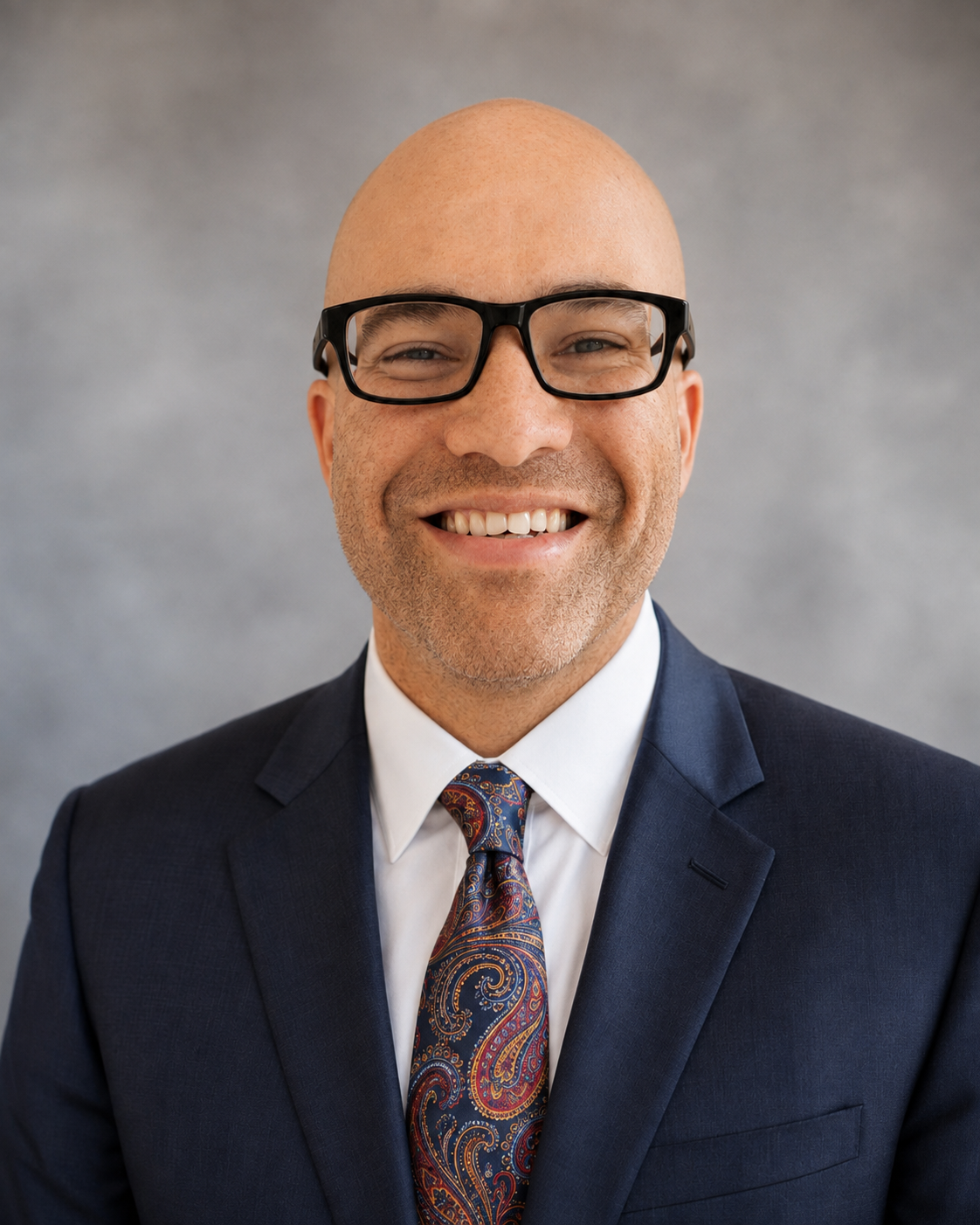
Career Story
My career began in workers’ compensation claims, progressing from case management to technical leadership. I handled complex, litigated, multi-jurisdictional claims and converted operational expertise into tools, training, executive exposure guidance, and client solutions. That foundation carried me into insurance technology, product leadership, enterprise delivery, portfolio strategy, and organizational transformation.
That range shaped the questions I ask: Where does ownership break down? Which problems recur because the operating model rewards the wrong behavior? What should become a shared capability instead of remaining heroic individual effort?
UNDERSTAND
Connect business outcomes, customer needs, technology constraints, incentives, risk, organizational behavior, and delivery reality rather than optimizing one function in isolation.
DESIGN
Clarify priorities, decision rights, governance, feedback loops, measures, capabilities, and roles so strategy has a practical mechanism for becoming execution.
BUILD
Develop leaders and specialists who can exercise judgment, communicate broadly, own outcomes, and improve the model without depending on a single person to hold it together.
Leadership
Much of that leadership has happened in matrixed environments. It has required clear direction, candid feedback, and enough shared purpose and structure for people from different disciplines to act like one team.
Coach technical and delivery professionals to strengthen strategic thinking, executive communication, client judgment, and understanding of the business outcome behind their work.
Connect individual workstreams to the larger mission so people understand why priorities exist, where their decisions fit, and how success is measured beyond completion of their own deliverable.
Use coaching, measurable checkpoints, candid feedback, mentoring, and escalation when necessary—with the goal of improving capability rather than simply identifying a gap.
Build Centers of Excellence, shared practices, enablement, governance models, mentoring relationships, and cross-functional communities so knowledge spreads instead of staying concentrated in a few people. That pattern began in claims, where I created a jurisdiction-aligned hearing-loss calculator that was distributed nationally—turning specialized judgment into consistent enterprise capability.
resources across complex enterprise program environments
Across Insurity, Census, enterprise client programs, internal leadership forums, and formal coaching relationships, my leadership has spanned direct reports and matrixed teams. I have set direction, allocated work, coached leaders and specialists, influenced hiring and staffing, addressed performance concerns, and created operating conditions in which teams could succeed.
I build leaders who can exercise judgment, communicate across functions, and improve the system—not merely execute within it.
Strategic Initiatives
The most consequential initiatives rarely fit within one function. I lead the work that requires strategy, operations, technology, product, and delivery to move together.
Translate broad objectives into priorities, sequencing, operating cadence, ownership, measures, and decisions teams can act on.
Find recurring friction, determine the structural cause, experiment with better practices, measure the result, and make successful behavior easier to repeat.
Balance finite capacity across immediate operational needs, modernization, capability investments, risk reduction, and longer-term strategic priorities.
Current work includes agentic-AI discovery and implementation planning, connecting workflow redesign, governance, adoption, and value realization so AI becomes part of the operating model rather than a technology overlay.
Selected Work
Led a three-year strategic advisory portfolio embedded with a major financial institution's Center of Excellence, balancing modernization and governance priorities with the immediate needs of dozens of application teams.
Enterprise leaders needed modernization, standardization, stronger governance, and better portfolio health. Individual application teams were focused on production, delivery, compliance, usability, and technical problems.
Built intake, prioritization, quarterly planning, governance, capacity allocation, executive narratives, and evolving advisory capabilities spanning modernization, low-code governance, usability, upgrades, performance, and enablement.
A team of senior specialists became a coordinated portfolio capability able to identify patterns, develop client practitioners, reuse solutions, and connect tactical work to strategic goals. The program also influenced approximately $5.1M in follow-on services.
The result I value most: the program increasingly created capability rather than dependency.
Led across five application teams and established Mobility and UI/UX Centers of Excellence when important needs repeatedly crossed team boundaries.
Multiple delivery teams shared critical mobile and user-experience needs while expertise and decision-making remained distributed across the program.
Created specialized cross-team Centers of Excellence, coordinated priorities and dependencies, and built mechanisms for shared guidance, technical consistency, and reusable expertise.
Recurring needs became shared program capabilities instead of problems each project solved independently.
Sometimes the most important transformation decision is changing the organization around the problem.
Across Liberty Mutual and Insurity, converted workers’ compensation operating knowledge into decision tools, product logic, training, implementation guidance, and client-facing solutions.
Built judgment through complex, litigated, multi-jurisdictional claims; medical and disability benefits; settlements; regulatory variation; client reviews; and executive exposure recommendations.
Created a jurisdiction-aligned hearing-loss calculator that was distributed nationally, standardizing a specialized calculation and reducing dependence on individual expertise.
At Insurity, applied workers’ compensation claims experience to help design rules-based predictive decision support, combining diagnosis, occupation, and claimant and employer disposition—including relationship indicators—to surface claims with greater potential duration and exposure.
Domain expertise creates strategic value when it becomes a repeatable decision mechanism rather than remaining individual judgment.
Leadership Point of View
A successful initiative can hit its milestones and still leave the organization dependent on the same people, the same workarounds, and the same heroic effort.
The standard I care about is higher: clearer ownership, stronger leaders, better feedback loops, reusable capability, and an organization increasingly able to solve the next problem without rebuilding the solution from scratch.
Background
Recruited for workers’ compensation expertise; expanded into scaled leadership, enterprise transformation, portfolio governance, organizational design, and executive advisory · 2017–Present
Functionally operated across business analysis, product ownership, scaled Scrum leadership, solution consulting, sales support, and implementation; helped scale the product-delivery organization from approximately 8 to 40 people across four development teams · 2015–2017
Complex workers’ compensation strategy, technical leadership, nationally distributed tools, executive exposure guidance, training, technology implementations, and client solutioning
Adjuster development, quality and compliance, escalation leadership, client education, and claims-to-technology translation

Domain depth
Chartered Property Casualty UnderwriterCPCUFormalized the insurance, risk, and operating judgment that continues to inform how I approach complex transformation.
Technology signal
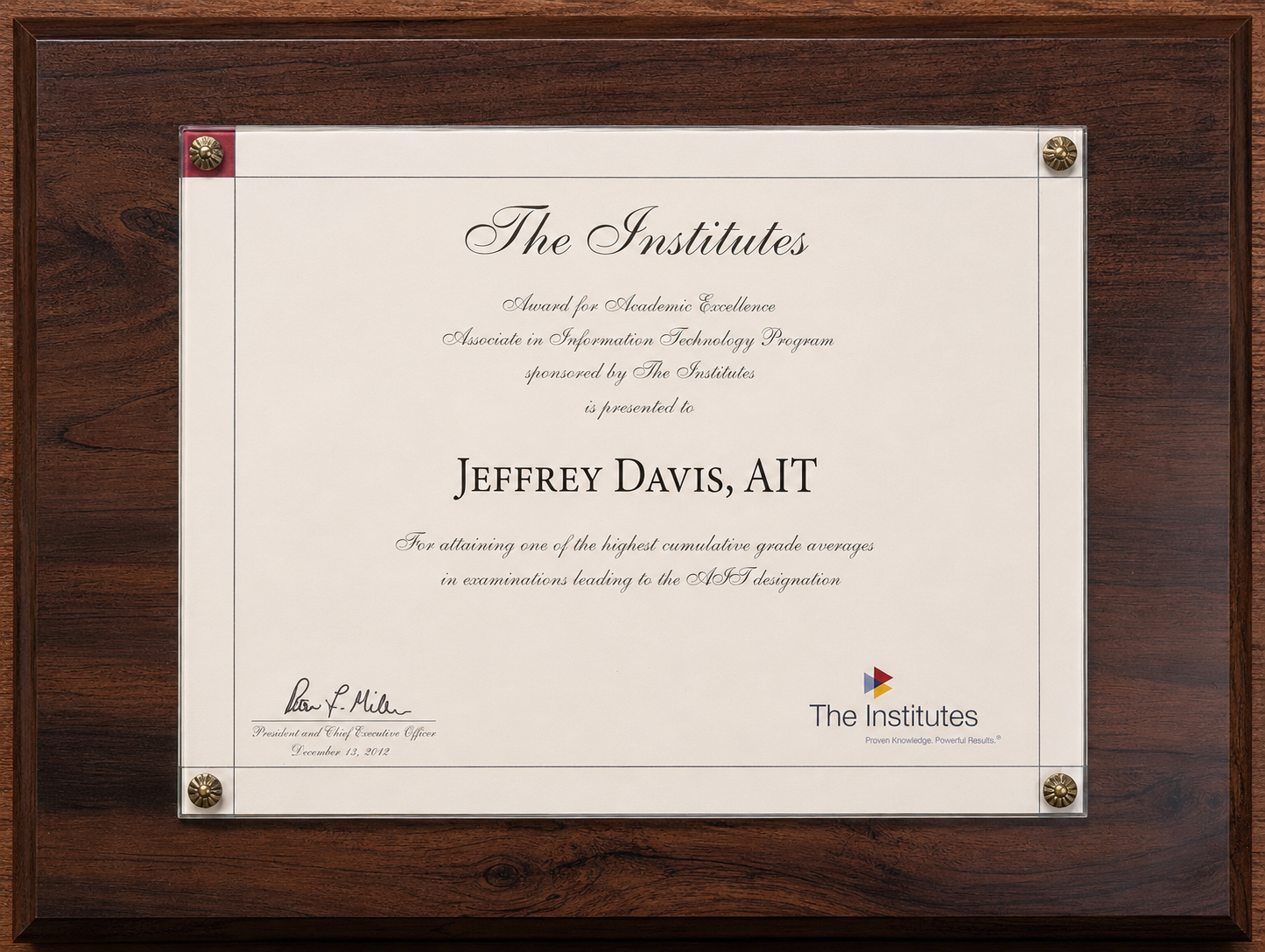
Associate in Information TechnologyAIT · Award for Academic ExcellenceRecognition for one of the highest cumulative grade averages across the examinations leading to the AIT designation reinforced my technology aptitude and accelerated my move from claims operations into insurance technology.
Business–technology bridge
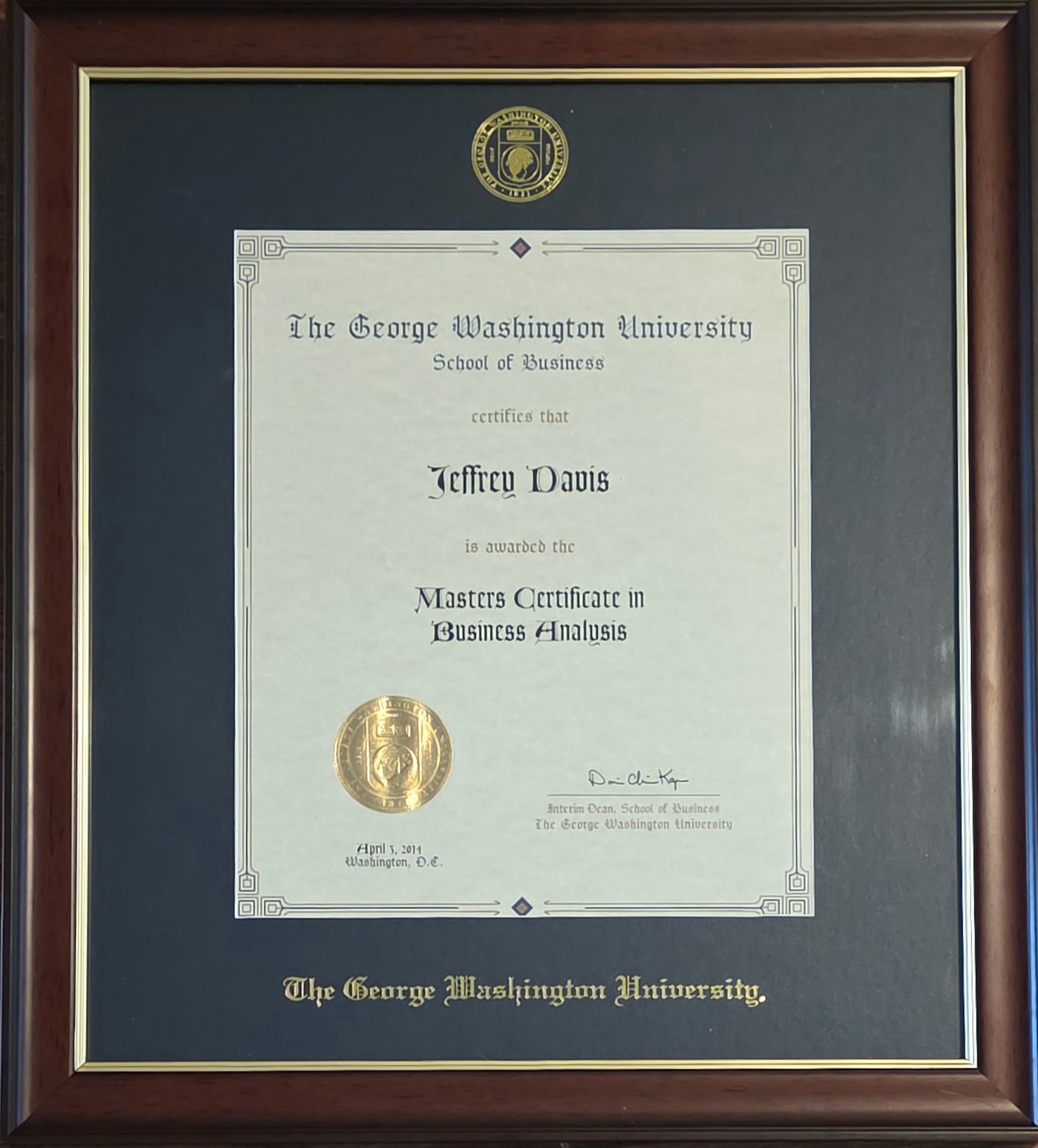
Master's Certificate, Business AnalysisGeorge Washington UniversityAdvanced study strengthened my ability to translate operating complexity into product, process, and technology decisions.
Enterprise synthesis
M.S., Information Technology ManagementIndiana University · Kelley School of BusinessCapped the progression by integrating technology, operating models, organizational leadership, and enterprise decision-making.
Selected certifications: PSM II · PSPO · SPS · ITIL Foundation · Pega business and architecture certifications
One Principle